
Menu
-
Monopoly Go
-
FC 27
-
Diablo 4
-
Grow A Garden 2
-
MLB The Show 26
-
Call of Duty: MW4
-
College Football 27
-
Call of Duty: Black Ops 7
-
ARC Raiders
-
Fallout 76
-
GTA5
-
Path of Exile 2
-
Call of Duty: Black Ops 2
-
Aion 2
-
Madden NFL 27
-
Helldivers 2
-
Wardogs
-
Path of Exile 1
-
NBA 2K27
-
RuneScape: Dragonwilds
-
Aion Classic
-
Borderlands 4
-
Plants vs Brainrots
-
Seven Knights Re:birth
-
Growtopia
-
Bigo Live
-
Garden Tower Defense
-
Type://Soul
-
Creatures of Sonaria
-
ROM: Golden Age
-
Fish it
-
Hytale
-
Arknights: Endfield
-
The Seven Deadly Sins: Origin
-
DonutSMP
-
No Rest for the Wicked
-
Lineage Classic
-
The Midnight Walkers
-
Forza Horizon 6
-
Highguard
-
Anime Fighters Simulator: Endless
-
Bee Swarm Simulator
-
Raven 2
-
Legend of YMIR
-
Anime Eternal
-
Anime Vanguards
-
Where Winds Meet
-
Ashes of Creation
-
The Forge
-
Escape Tsunami For Brainrots

First Look at MLB The Show 26 New Features!
San Diego Studio finally pulled back the curtain on MLB The Show 26 back, and while we're still waiting on full gameplay streams, what's here already has me rethinking how I'll approach the plate, the field, and the front office this year.
Let me start with the big picture. The devs are leaning hard into authenticity this cycle. They're talking advanced logic, new data metrics reshaping ratings, pitch effects, even bat-ball physics. It's not just buzzwords—I've seen this evolution year over year, where small tweaks turn good gameplay into something that genuinely mimics the ebb and flow of real baseball. Remember how ShowTech last year cleaned up the throw meter and added all those animations? This feels like the next step, making every at-bat and defensive play carry more weight.
Gameplay: Where the Real Changes Hit the Field
This is where I'm most excited. Defense has always been my focus—nothing beats turning a sure double into an out with perfect positioning and a quick relay. Now they're splitting the Reaction attribute into four directional ratings, pulling from actual MLB data. That means your shortstop's left-side reaction might be elite while right-side lags, forcing you to think about matchups and shifts in a deeper way.
Catchers get pop time as its own dedicated attribute. I've tested this kind of thing in practice mode before: throw a runner stealing second, time the transfer from glove to throw. In past games, it felt too uniform. Now, with knee-down animations and smarter blocking, a guy like Adley Rutschman should feel noticeably quicker than average backstops. Reproducible test? Load up practice, pick a high-pop-time catcher versus a low one, and run repeated steal attempts. The difference should show in throw velocity and accuracy, cutting down runners more consistently.
Fielders get "catches on the run" for covering bases efficiently, better cutoff logic from corner infielders. Outfield walls and surfaces play into new catch animations too. It's these layered details that reward strategy—do you play your corner outfielder shallow to cut off the gap hit, risking the wall carom?
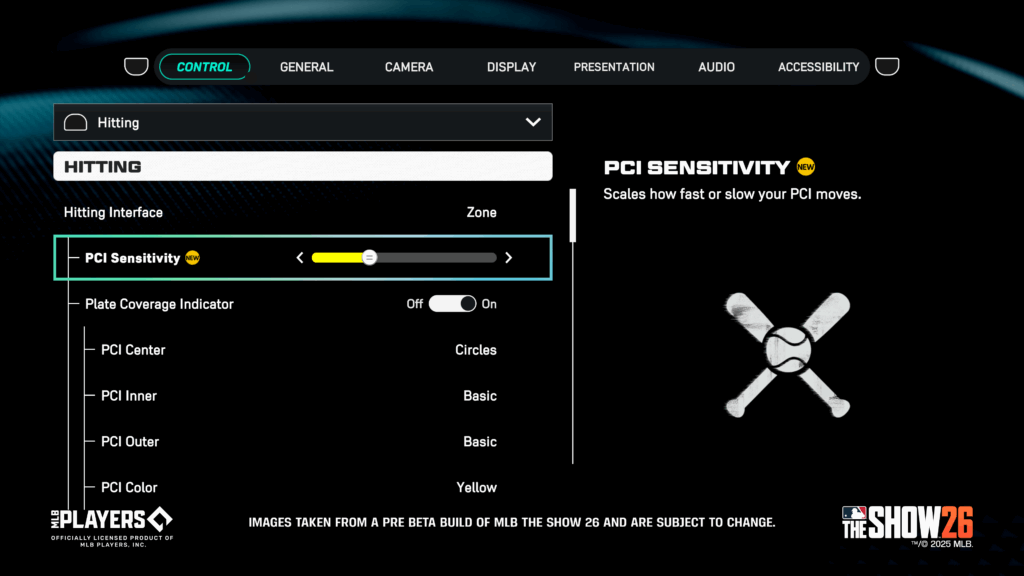
On offense, they're teasing "Bear Down," "Big Zone Hitting," "PCI Sensitivity," "Fixed Zone," and "Free Anchor." We got screenshots of the PCI sensitivity slider and anchor feature. From what I can gather, sensitivity lets you fine-tune how responsive your PCI feels—crank it up for pinpoint control if your timing's sharp, dial it down if you're chasing pitches too aggressively. Free Anchor might let you lock the PCI in certain zones without drifting. I'll be experimenting day one: set sensitivity high in practice, work on late swings against off-speed, see if perfect-perfects land more consistently without overcommitting early.
ABS and PitchCom get more replay depth, which should make those pitcher-batter duels even tenser.
Road to the Show: Deeper Roots, Bigger Dreams
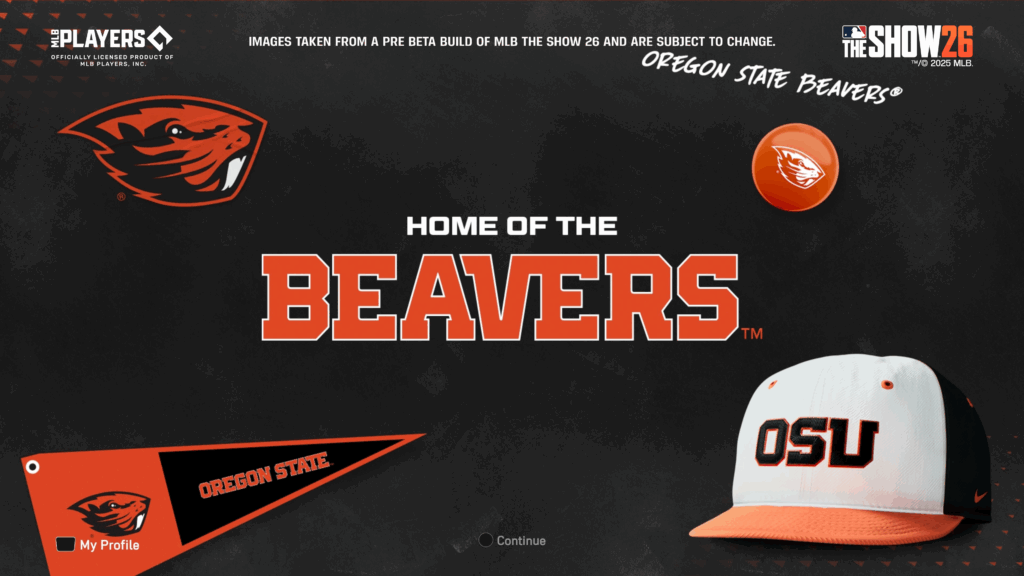
RTTS keeps building on the amateur years they added last cycle. Now you've got 11 new colleges to choose from—places like UNC Chapel Hill and Oregon State that actually feed talent to the pros. The real hook? You can compete in the College World Series. I started a two-way player last year, grinding from high school showcases to the draft. This addition makes the pre-draft journey feel monumental—win a CWS ring, boost your stock, maybe go higher and sign for more bonus money that translates to better starting attributes.
It's not just window dressing. Choosing a powerhouse program could mean tougher competition early, sharpening your skills faster. Or go to a mid-major for more playing time and quicker stat padding. My plan: start at Oregon State, focus on contact hitting to rack up hits in college ball, then transition to power in the minors. The mid-to-late career progression they teased should keep things fresh once you're established—maybe contract negotiations carry more weight, or mentorship roles open up.
Franchise Mode: Smarter Baseball, Finally
Franchise players, this one's for you. The front office revamp sounds transformative. Lineup logic now uses modern analytics—high OBP guys leading off more often, your best pure hitter sliding into the two-hole. And it adjusts in-season based on performance. No more static orders ignoring a hot streak.
Here's a quick comparison from the dev screenshots (Yankees example):
| Aspect | Old Logic | New Logic |
|---|---|---|
| Leadoff Hitter | Often speed/power guy | Prioritizes high OBP for table-setting |
| #2 Spot | Varied, sometimes cleanup | Best overall hitter for RBI chances early |
| In-Season Adjustments | Manual or minimal | Dynamic shuffling based on hot/cold streaks |
| Rotation Management | Basic durability | Improved logic factoring rest, matchups |
Trades get a brand-new interface too—streamlined but deeper. I've simmed seasons where AI trades felt random. This should make dealing for that missing piece feel strategic, not frustrating.

Diamond Dynasty and the Grind Ahead
They're bringing back Now & Later Packs with carryover from '25—smart move for rewarding loyalty. New ways to play are promised, building on Diamond Quest and Weekend Classic. Storylines returns with Negro Leagues Season 4, which has been one of the series' best additions for historical depth.
The mode's endless, and that's its strength. But starting from scratch every year can burn you out early. I've found that focusing on parallel XP paths first unlocks captain boosts quickest—reproducible chain: complete team affinity early for those stub rewards, then parallel your best cards. If real life cuts into grind time, sites like U4GM.com offer a reliable way to buy MLB The Show 26 stubs and jumpstart your squad without losing the strategic fun.
Look, boundaries matter. I never touch anything that breaks the game's balance, but a stub boost to snag that early legend card? It keeps the focus on lineup building and online matches, not endless showdowns.
Wrapping It Up: Why This Feels Like a Step Forward
Putting these pieces together—smarter defense that rewards positioning, hitting tools for different skill levels, RTTS paths that feel earned, franchise AI that thinks like today's GMs—MLB The Show 26 is shaping up to respect the sport's nuance. I've played enough cycles to know hype can fade if execution slips, but these changes address real pain points from community feedback.
March feels far away, but I'm already planning my first RTTS build and franchise rebuild. What about you—which new feature has you rethinking your approach? Until the next stream drops, this first look has me optimistic. Baseball's back, and it might be better than ever.
